
Can You See The Northern Lights in NYC? How to Really do it
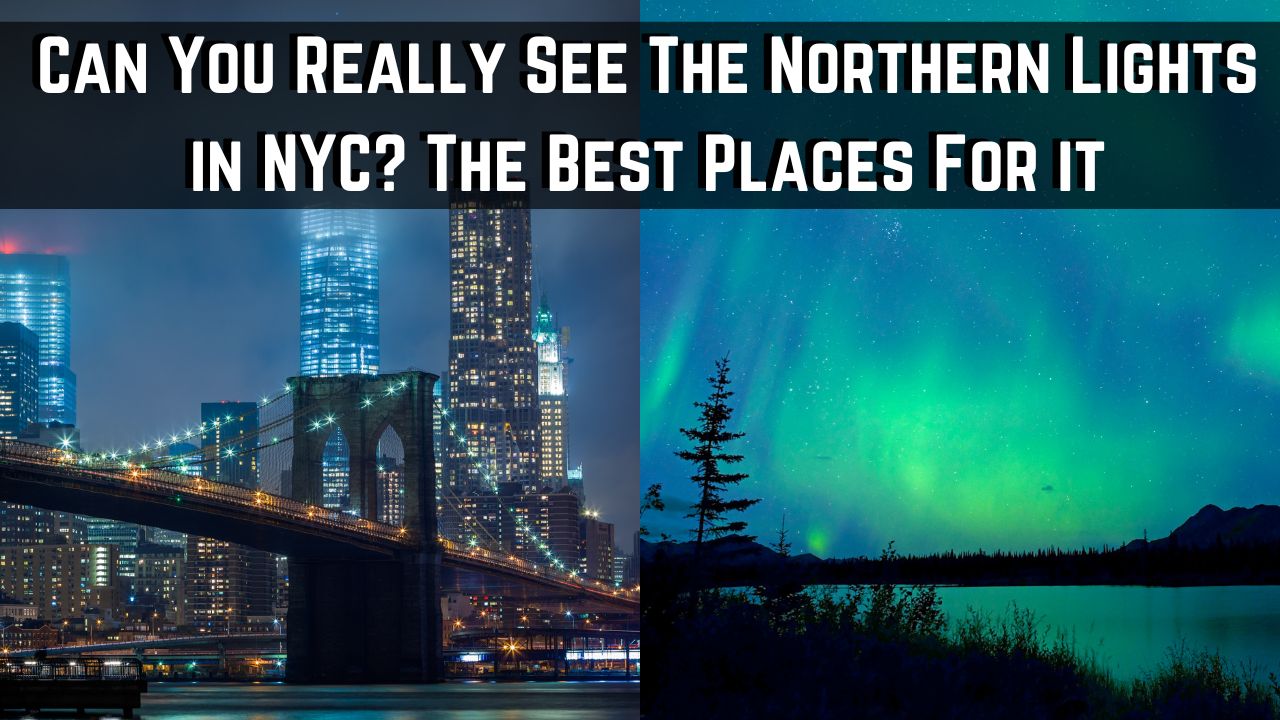
There are extremely rare cases where it’s possible to see the northern lights in NYC but because of all the light pollution, even if this rare event does happen there, your odds of actually seeing it is almost impossible.
But the good news is that if you live in NYC and you’re expecting the northern lights to appear, there’s a specific way you can greatly increase your chances of seeing them and it involves doing this:
- Knowing when the northern lights are expected to be in the NY area (check news and apps).
- Being ready to travel north (upstate NY or further) on the night when they are expected to be seen (you don’t even have to go very far).
I’m going to go over these 2 specific things because when it comes to catching the northern lights, you have to be very calculating to improve your odds of seeing them, so let’s go over that:
How to see the northern lights in New York:
1) Knowing when they are likely to happen (this part is actually very simple):
When the northern lights are expected to be seen in the NY or the NYC area, you will see a lot of news reports online talking about it and most of them will give predictions on what day it’ll happen. Whatever day they mention, that is the one you’re going to want to be ready for (taking a day off, planning a short day/night trip).
There are also more than a few free apps that show you a radar of the world, including the NY area and where the northern lights are every single day. I use the Aurora app, it’s free and great for this. Here’s an example of how it looks:
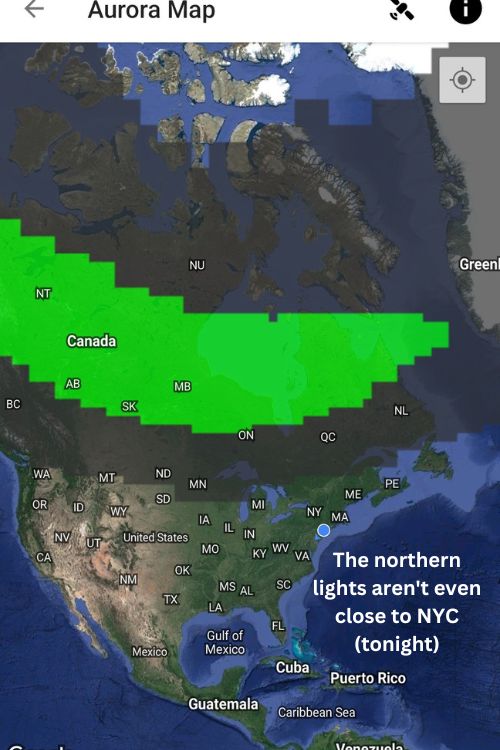
The best way to navigate with this is by doing the following:
- Monitor the news for info on the northern lights showing up in NYC.
- As the predicted day it’ll happen comes up, check the app daily (before/after the predicted day) to see if it’s happening.
- Make sure to check the KP index on the app (5 or higher = better chances of seeing the northern lights).
- Do know that predictions for the northern lights appearing is not a guarantee and you need to check this stuff daily before the prediction date so you don’t plan a trip for nothing.
Now provided that the northern lights actually do occur on the day that it’s predicted (again keep in mind that this can change daily or they may not appear at all), here’s what to do next:
2) Knowing where to go to see the northern lights (and it’s not in NYC):
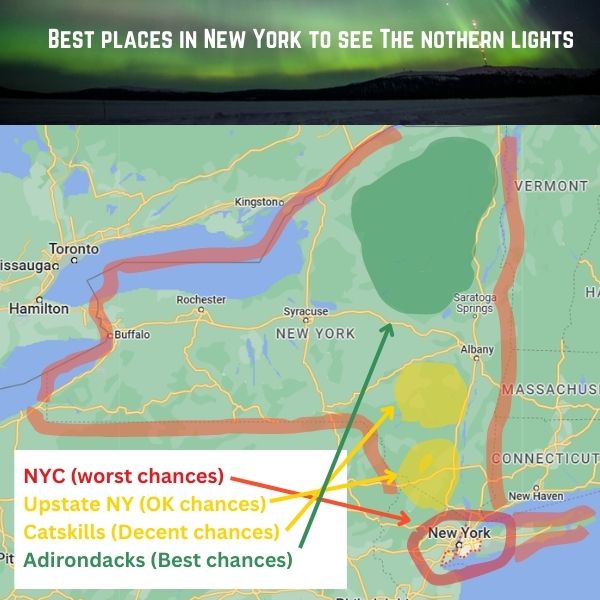
You’re going to want to go anywhere in the following regions north of New York city and plan your trip so you get there at least before 10 pm:
- Forget NYC itself. The odds of seeing the northern lights there are the worst.
- Upstate NY (1-2 hour drive from NYC). OK chances of seeing the northern lights.
- Catskill Mountains (3-4 hour drive from NYC). Better chances of seeing the northern lights.
- Adirdonack Mountains (5-6 hour drive from NYC). Best chances of seeing the northern lights there.
The key with any of these regions is also to avoid getting too close to other major towns and cities because of their light pollution. The further into the mountains you are in any of these places, the darker the skies will be which will make it more likely for you to see the aurora borealis.
Here is a map of where you can see the northern lights in New York:
Specific areas where you can see the northern lights in New York:
1) Let’s start with upstate New York:
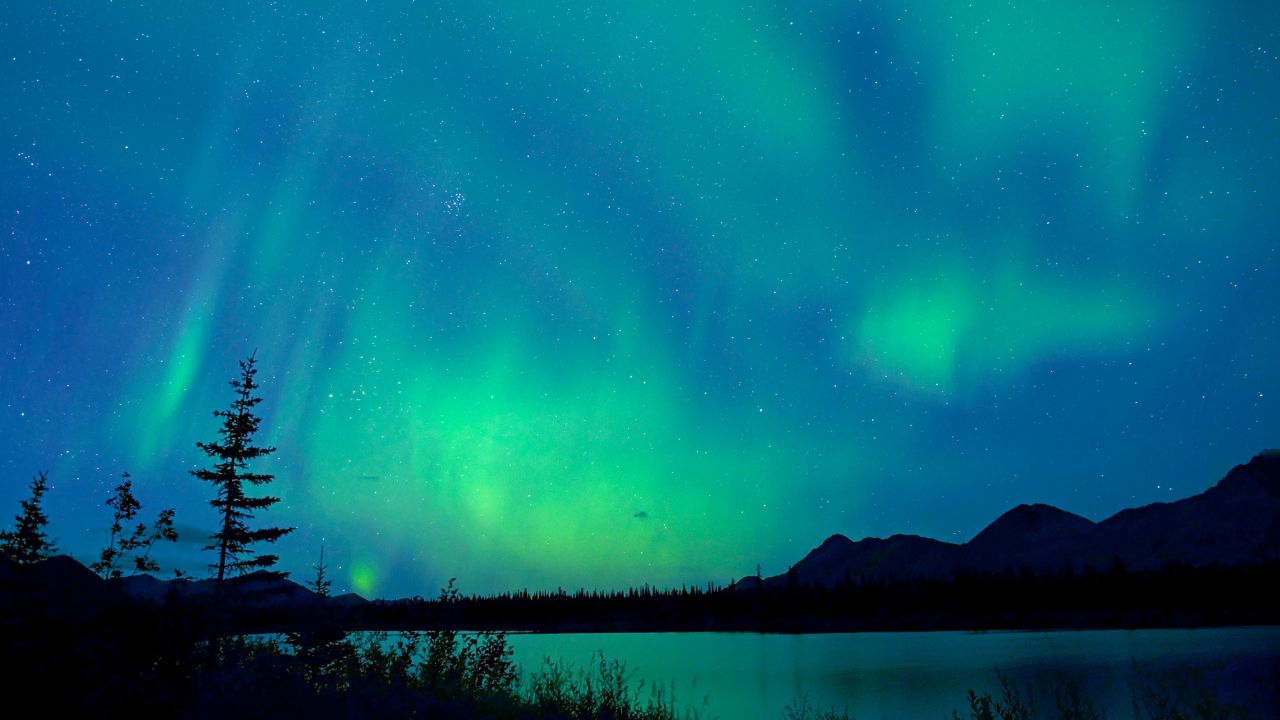
A) I recommend going at least to Bear Mountain State Park. This park has actually had times where you could see the northern lights there (here’s one case). However, this area is also very close to a few towns so even if you’re lucky to see them, you won’t see them as best as you could if it were darker. Keep in mind that Bear Mountain closes after 8 so you need to be outside the park to see it.
2) Another option is Harriman State Park. It is right by Bear Mountain and open 24-7. You would be able to drive through the Seven Lakes drive in the park and find one or more areas to stop and see them there (one of the best options is near Silver Mine, there’s an open area there).
3) Hudson Highlands State Park. While parts of it close after a certain time, there are specific areas where you may be able to get good views of the northern lights. The safest would likely be Little Stony Point where you can walk out to the Hudson Valley shore and get good views. There are also a few hikes in the area, but they are either closed or too dangerous to hike at night (Breakneck Ridge is the main one there).
4) Lake Minnewaska and Mohonk Preserve are the next best options for seeing the northern lights (further north). They’re right by each other and will likely be closed if you go there at night (Although the Mohonk Preserve area has a place called Mohonk Mountain House which could be great for viewing the northern lights as it’s at the top of a mountain).
2) The Catskill Mountains are next (further up):
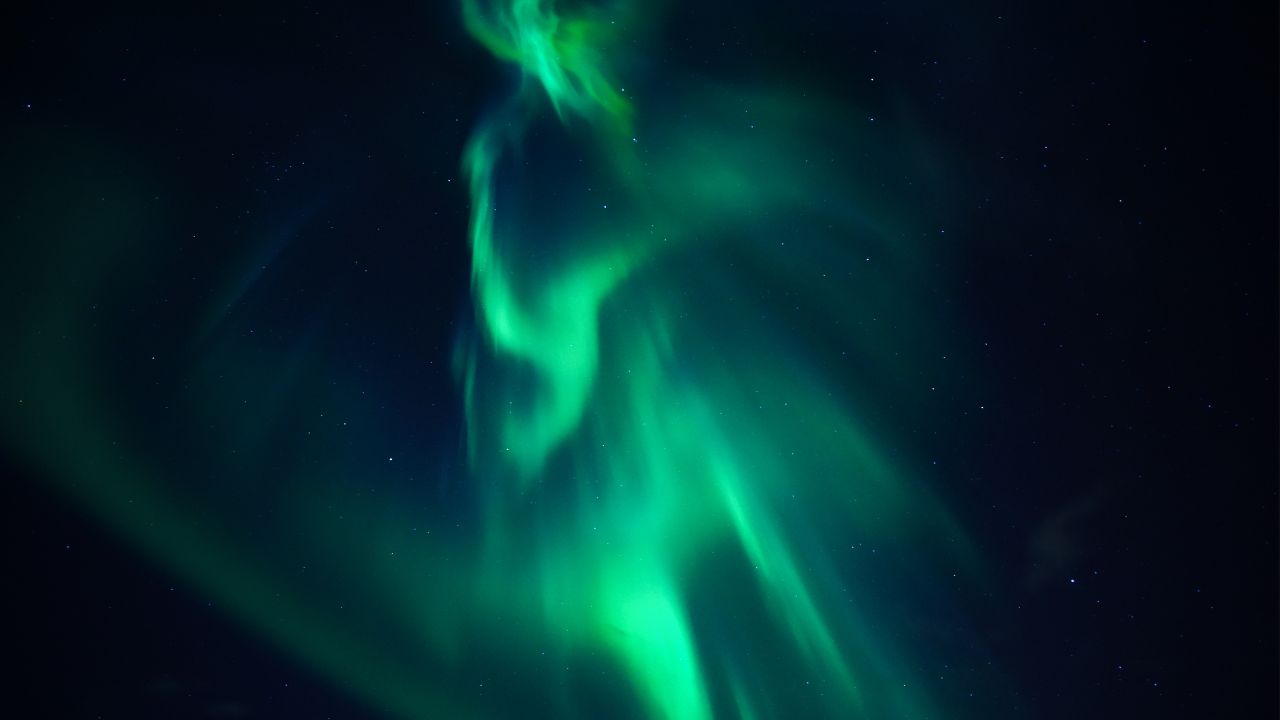
The peaks in the Catskill Mountains are way higher and there’s far less towns with light pollution there. While there’s a lot of Catskill Mountain hikes you can take to potentially see the northern lights, I would not advise doing that at night, so let’s stick to places where it’s safer there:
A) North South Lake is potentially the best spot. There’s camping areas there and it’s at one of the highest areas in the Catskills).
B) Hunter Mountain is also a great choice as it’s very high up in the area and you can potentially see the lights from the resort.
3) And finally the Adirondack Mountains:
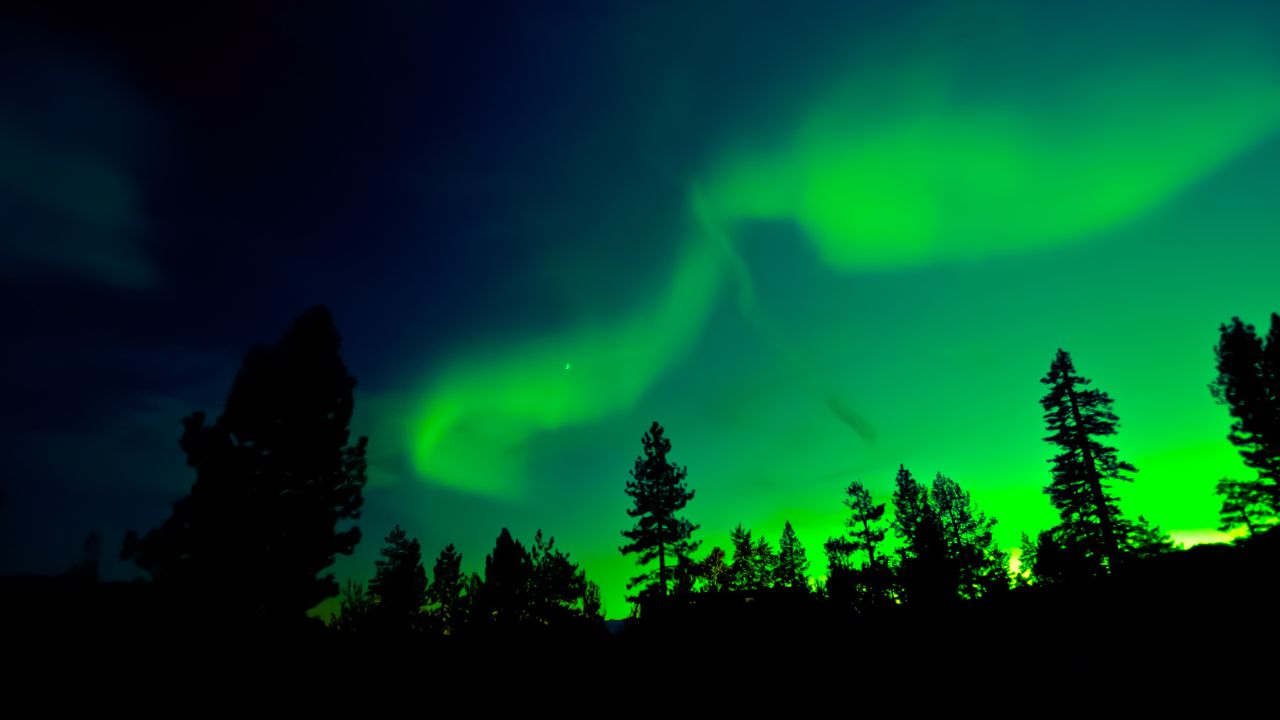
Your best chances of seeing the northern lights in New York would be in this area. It’s the furthest mountain range in NY with the highest peaks and to keep things safe, I will recommend a few spots:
A) Anywhere on or near Whiteface Mountain (it’s an attraction to one of the highest areas in the Adirondacks, but it may be closed at night). Even if Whiteface Mountain is closed, the area nearby is very high up too so you’ll still have decent chances of seeing the lights there.
B) If you drive on the Highpeaks Scenic Byway (one of the top scenic drives in New York), you will be able to see many open fields and areas where the northern lights could show up (and the skies are very dark in the area).
Even better places to see the northern lights than in New York:
If you’re OK with traveling into other states in the New England area, there’s an even better chance to see the northern lights there. I actually have a post the best places to see the northern lights in the USA and there’s 3 states on that list which are close to New York to do just that:
1) Vermont:
Any peak in the Green Mountain National Forest would be good and if you can drive through Smugglers Notch, you’d also have a good chance of seeing the northern lights there.
2) New Hampshire:
Either Franconcia Notch State Park (any peak there) or any of the big peaks in the area which are called the White Mountains (these are the highest peaks in all of the northeast making it better for seeing the northern lights).
3) Maine:
The further north you go in Maine, the better the chances and this is going to be the furthest northeast you can go in the states. Baxter State Park would be the most ideal spot for the aurora borealis.
4) Mont Tremblant:
This is actually in Canada and it’s about 3 hours north of the Adirondack Mountains. There is an amazing resort there called Mont Tremblant where you would have an even better chance at seeing the aurora borealis than in any of the eastern states. This is actually one of many places in Canada where you can see them and I’ll do a separate post on that in the future!
Either way, as rare as the northern lights are to see in NYC they still do pop up and the next time it’ll happen (for NYC, there’s a prediction that it may show up July 13th 2023), I’m going to follow the instructions above and head as north as I can for one night to check them out.
Camera recommendations for capturing the northern lights:
The type of cameras you need to get the best photos of the northern lights aren’t cheap, but here are 2 amazing options:
1) Cannon EOS R6. This is one of the cheapest ($2,000), yet highest quality night time cameras today.
2) The Sony A7S. This is probably one of the top 3 cameras for detailed photos/videos and especially night time photography (But it is more expensive than the Cannon EOS R6).
The more time you have to plan a trip to see the northern lights, the further north you can go to improve your chances of that, but at the very least if you only have 1 night to do it, then just head up to upstate NY. It’s not a guarantee that you’ll see the northern lights (nor is any area above), but there’s a way better chance in those regions than if you stay in NYC and hope to spot even a little bit of the aurora borealis.
